Daasanach Tribe of Africa – Life, Culture, Survival & Unique Traditions of the Omo Valley
In one of East Africa’s harshest landscapes, the Daasanach people live with resilience, adaptation, community, and deep cultural identity near the Omo River and Lake Turkana.
Introduction: Who Are the Daasanach People?
The Daasanach, also written as Dassanech, Dasenech, or Daasanech, are an indigenous ethnic group living around the Omo River delta and the northern Lake Turkana region. They are found mainly in southern Ethiopia and northern Kenya, with connections extending toward South Sudan. Their homeland is shaped by water, dry land, cattle, fishing, farming, drought, migration, and survival.
The Daasanach are often described as semi-nomadic and agropastoral. This means their way of life includes herding animals, growing crops when conditions allow, fishing, and adapting to seasonal changes. They are strongly connected to the Omo River and Lake Turkana, one of Africa’s most dramatic landscapes. Sources describe the Daasanach as living in Ethiopia, Kenya, and South Sudan, with their main homeland near Lake Turkana and the Omo River region. :contentReference[oaicite:0]{index=0}

This page explores Daasanach life respectfully: where they live, how they survive, what they eat, their houses, traditions, challenges, climate adaptation, and why their culture is important for understanding Africa’s Omo Valley communities.
Viral Hook: Survival in One of Africa’s Toughest Environments
Imagine living in a place where the weather can be dry and unforgiving, where cattle are wealth, where floods can bring food but also danger, and where families must constantly adapt to survive. This is the world of the Daasanach people.
Many outsiders look at traditional communities and call them “simple.” But the truth is different. Surviving in a harsh environment requires intelligence, social organization, memory, skill, and deep knowledge of land, animals, seasons, and water.
Where Do the Daasanach Live?
The Daasanach live around the Omo-Turkana basin. Their life is closely tied to the lower Omo River, the Omo delta, and Lake Turkana. This area is semi-arid and challenging, but it also provides opportunities for herding, fishing, and flood-based cultivation.
Lake Turkana is one of the most important landmarks in this region. It is located in northwestern Kenya and southwestern Ethiopia and is widely described as the world’s largest permanent desert lake. :contentReference[oaicite:1]{index=1}
Southern Ethiopia
The Daasanach are strongly connected to the lower Omo Valley and the Omo River delta.
Northern Kenya
Many Daasanach communities live near the northern shores of Lake Turkana.
South Sudan Links
Some sources describe Daasanach connections extending toward South Sudan border regions.
Meaning of the Name “Daasanach”
The name Daasanach is often connected with the meaning “people of the delta.” This meaning fits their geography because their identity is closely linked with the Omo River delta near Lake Turkana. Some sources also note alternative names such as Geleb, Galeb, Marille, or Dassanech. :contentReference[oaicite:2]{index=2}
Names matter because they carry memory. For the Daasanach, the delta is not only a place. It is part of identity, movement, food, history, and survival.
Daily Life: Cattle, Crops, Fish and Family
Daasanach daily life is shaped by the environment. Traditionally, they are pastoralists, meaning cattle, goats, and sheep play a central role in life. But because of land loss, drought, climate pressure, and changing conditions, many Daasanach have become more agropastoral, combining herding with farming and fishing. :contentReference[oaicite:3]{index=3}
When the Omo River floods and leaves fertile soil behind, Daasanach families may grow crops such as sorghum, maize, pumpkins, and beans. When farming is difficult, people depend more on livestock, fishing, trade, and other survival strategies. :contentReference[oaicite:4]{index=4}
| Activity | Importance |
|---|---|
| Cattle Herding | Cattle are connected to wealth, food, identity, and social status. |
| Goats and Sheep | Useful for milk, meat, trade, and survival during difficult seasons. |
| Farming | Crops grow when river floods leave fertile land behind. |
| Fishing | Important for communities living closer to Lake Turkana and river areas. |
Traditional Houses and Settlement Life
Daasanach houses are often practical and movable because life may require seasonal movement. Traditional huts are made using local materials such as branches, hides, mats, and woven materials. These homes reflect environmental wisdom: they are built for heat, movement, and available resources.
Sources describe Daasanach cattle-herding families as living in dome-shaped houses made from branch frames and covered with hides and woven materials. These structures are not random. They are designed for people whose lives are connected with movement, animals, and climate. :contentReference[oaicite:5]{index=5}
SEO Fact: Traditional houses are an excellent section for your blog because readers love learning how communities build homes adapted to climate and lifestyle.
Food and Survival
Daasanach food depends on season, location, animals, and access to water. Sorghum may be cooked into porridge. Maize may be roasted. Milk from cattle and goats is important where animals are available. Fishing communities may rely more on fish and lake resources.
This food system is not only about taste. It is about survival. In a semi-arid region, people must use what the land, animals, and water can provide. Every food source has meaning because it connects people to climate, movement, and family life.
Sorghum
A key crop used for porridge and traditional food preparation.
Maize
Often grown where river conditions allow farming.
Milk
Livestock provide milk, which is important in pastoral life.
Fish
Fishing supports communities near Lake Turkana and river zones.
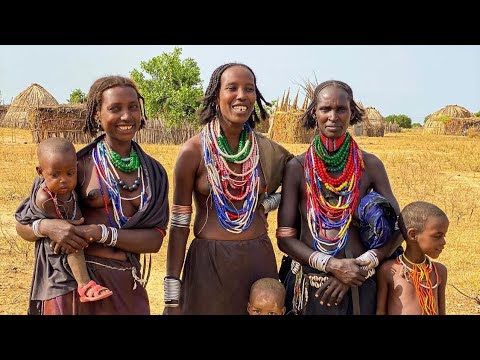
Culture, Identity and Social Structure
Daasanach society includes social relationships based on clan lineages, age groups, family networks, and reciprocal obligations. Like many pastoral communities, social cooperation is essential. In harsh environments, people survive through shared responsibilities, exchange, family support, and community memory.
Sources describe Daasanach society as highly egalitarian, with age sets and clan lineages involving strong reciprocal relations. :contentReference[oaicite:6]{index=6}
Culture is not only clothing or ceremonies. Culture is also how people solve problems, share resources, raise children, settle disputes, remember history, and protect community identity.
Language of the Daasanach
The Daasanach speak the Daasanach language. Some sources classify it in the Cushitic branch of the Afro-Asiatic language family, while other Omo Valley travel sources describe language links differently. The important point for a general educational blog is that the Daasanach have their own language and oral traditions that preserve memory, history, and identity. :contentReference[oaicite:7]{index=7}
Respectful Writing Tip: When writing about indigenous communities, avoid treating language as a small detail. Language is a living part of identity.
Clothing, Beauty and Personal Expression
Daasanach clothing and decoration are shaped by environment, tradition, gender, age, availability of materials, and personal expression. Like many Omo Valley communities, appearance can communicate identity, status, beauty, life stage, and belonging.
Tourism images often focus heavily on appearance, but a respectful article should explain that clothing is only one part of culture. A person is not a costume. Every hairstyle, ornament, garment, or body decoration belongs to a deeper social world.
Traditional Materials
Clothing may include locally available materials linked to pastoral life.
Ornaments
Beads, bracelets, and decorative items may express identity and beauty.
Practical Design
Dress is influenced by climate, movement, and daily work.
Climate Change and Modern Challenges
The Daasanach face serious modern challenges. Droughts, floods, changing river conditions, land pressure, disease, conflict, and climate uncertainty affect their livelihoods. A community that depends on animals, water, and seasonal movement can suffer deeply when the environment changes.
A climate adaptation leaflet about the Daasanach in Ileret Ward, Lake Turkana describes them as a seminomadic and agropastoralist community living in southern Ethiopia, northern Kenya, and South Sudan, facing harsh climatic conditions and working on adaptation challenges. :contentReference[oaicite:8]{index=8}
Another travel account notes that droughts and floods have made Daasanach life more precarious in recent years. :contentReference[oaicite:9]{index=9}
Important: Do not present the Daasanach only as a “tribe from the past.” They are living people facing modern challenges today.
Myth vs Reality: Understanding the Daasanach Respectfully
| Myth | Reality |
|---|---|
| They live a “simple” life. | Their life requires complex knowledge of animals, seasons, land, water, and community systems. |
| They are isolated from the world. | They live across border regions and interact with neighboring communities, markets, tourism, and modern change. |
| They only herd cattle. | They also farm, fish, trade, and adapt depending on climate and resources. |
| Traditional culture never changes. | Daasanach life has changed due to drought, land pressure, borders, conflict, and climate change. |
| Tourist images explain everything. | Photos show appearance, but culture includes language, memory, family, economy, beliefs, and survival knowledge. |
Emotional Story: A Morning Near the Omo River
Before the heat grows heavy, a Daasanach family begins the day. The animals are checked. Water is discussed. Children listen to elders. The land is quiet, but every person knows that survival depends on timing, memory, and cooperation.
A young boy watches the cattle and learns which animals are strong, which are weak, and which direction the herd may need to move. A girl helps her family and listens to stories that carry the wisdom of older generations. A mother prepares food with what is available. An elder remembers past floods, past droughts, and the routes that once kept families alive.
To an outsider, the scene may look still. But inside the community, everything is knowledge: the wind, the soil, the river, the animals, the sky, and the stories. The Daasanach do not survive by chance. They survive by remembering, adapting, and staying connected.
Respectful Cultural Note
Some cultural practices among Omo Valley communities may be sensitive for global readers. A respectful educational article should avoid mocking, exoticizing, or judging people as if they are museum objects. The goal is to understand culture, history, and social context while also recognizing that communities are living, changing, and facing real modern pressures.
For SEO and trust, write with dignity. Use words like “community,” “people,” “culture,” “adaptation,” and “history.” Avoid words that make a community sound primitive or less human.
Why This Topic Is Powerful for SEO
The Daasanach tribe topic has strong SEO potential because readers search for African tribes, Omo Valley culture, traditional lifestyles, Lake Turkana communities, Ethiopia tribes, Kenya tribes, and survival stories. It is also visually strong, which helps with image SEO, Pinterest sharing, and educational traffic.
Ranking Angles
- Daasanach tribe of Africa
- Dassanech tribe Ethiopia
- Omo Valley tribes
- Lake Turkana communities
- African pastoralist tribes
- Daasanach culture and traditions
- People of the delta Africa
Image Sections for Blogger
Use respectful, properly licensed images. Avoid sensational tourist-style images that reduce people to costumes. Choose images that show landscape, community life, homes, river environment, livestock, and culture with dignity.

Omo Valley Landscape
Use near the introduction to show environment and place.

Pastoral Life
Use near the cattle, survival, and daily life sections.

Culture and Identity
Use near the culture, clothing, and identity section.
Internal Links
FAQs About the Daasanach Tribe
Where do the Daasanach people live?
The Daasanach live mainly in southern Ethiopia and northern Kenya around the Omo River delta and Lake Turkana, with regional links toward South Sudan.
What does Daasanach mean?
The name is often connected with the meaning “people of the delta,” referring to their connection with the Omo River delta.
Are the Daasanach pastoralists?
Yes. Traditionally they are pastoralists, but many also practice farming and fishing, making them agropastoral in many areas.
What do the Daasanach eat?
Their food may include sorghum, maize, milk, meat, and fish, depending on season, animals, river conditions, and location.
Why is Daasanach culture important?
It shows how people adapt to challenging environments through community knowledge, pastoralism, farming, fishing, language, and tradition.
SEO Title, Description and Keywords
SEO Title
Daasanach Tribe of Africa – Life, Culture, Survival & Unique Traditions of the Omo Valley
Meta Description
Discover the Daasanach tribe of Africa, also known as the Dassanech or Dasenech people. Learn about their life near the Omo River and Lake Turkana, culture, cattle herding, farming, fishing, traditions, survival skills, and modern challenges.
Keywords
Daasanach tribe, Dassanech tribe, Dasenech tribe Africa, Daasanach people, Omo Valley tribes, Lake Turkana tribe, Ethiopia tribes, Kenya tribes, African pastoralist tribes, Daasanach culture, Daasanach traditions, people of the delta, Omo River people, African indigenous communities
Conclusion: A Culture of Strength and Adaptation
The Daasanach people are not simply a tribe living in a remote region. They are a community with history, language, identity, and deep environmental knowledge. Their life near the Omo River and Lake Turkana shows how human beings adapt to difficult landscapes through animals, farming, fishing, family networks, and cultural memory.
Their story is important because it teaches respect. It reminds us that traditional communities are not frozen in time. They are living societies facing modern challenges, climate pressure, changing borders, and economic uncertainty.
To understand the Daasanach is to understand resilience. Their culture is a reminder that survival is not only physical — it is also social, spiritual, historical, and deeply human.
Share This Cultural History Page
If this article helped you understand the Daasanach people, share it with students, teachers, culture lovers, and anyone interested in African history.
No comments:
Post a Comment